
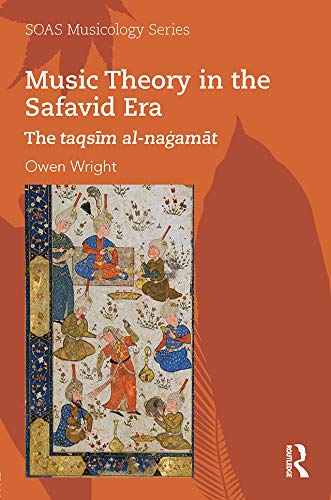
Music Theory in the Safavid Era: The taqsīm al-naġamāt (SOAS Studies in Music)
Product details
| Management number | 232007700 | Release Date | 2026/06/18 | List Price | US$16.24 | Model Number | 232007700 | ||
|---|---|---|---|---|---|---|---|---|---|
| Category | |||||||||
The Safavid era (1501–1722) is one of the most important in the history of Persian culture, celebrated especially for its architecture and art, including miniature paintings that frequently represent singers and instrumentalists. Their presence reflects a sophisticated tradition of music making that was an integral part of court life, yet it is one that remains little known, for the musicological literature of the period is rather thin. There is, however, a significant exception: the text presented and analysed here, a hitherto unpublished and anonymous theoretical work probably of the middle of the sixteenth century. With a Sufi background inspiring the use of the nay as a tool of theoretical demonstration, it is exceptional in presenting descriptive accounts of the modes then in use and suggesting how these might be arranged in complex sequences. As it also gives an account of the corpus of rhythmic cycles it provides a unique insight into the basic structures of art-music during the first century of Safavid rule. Read more
| ASIN | B07JGDVRMT |
|---|---|
| XRay | Not Enabled |
| Format | Print Replica |
| ISBN13 | 978-1351665872 |
| Edition | 1st |
| Language | English |
| File size | 21.6 MB |
| Page Flip | Not Enabled |
| Publisher | Routledge |
| Word Wise | Not Enabled |
| Print length | 448 pages |
| Accessibility | Learn more |
| Part of series | SOAS Studies in Music |
| Publication date | October 25, 2018 |
| Enhanced typesetting | Not Enabled |
Bestseller ranking
Ethnomusicology


Customers who viewed this product also viewed
Chess




Correction of product information
If you notice any omissions or errors in the product information on this page, please use the correction request form below.
Correction Request Form